
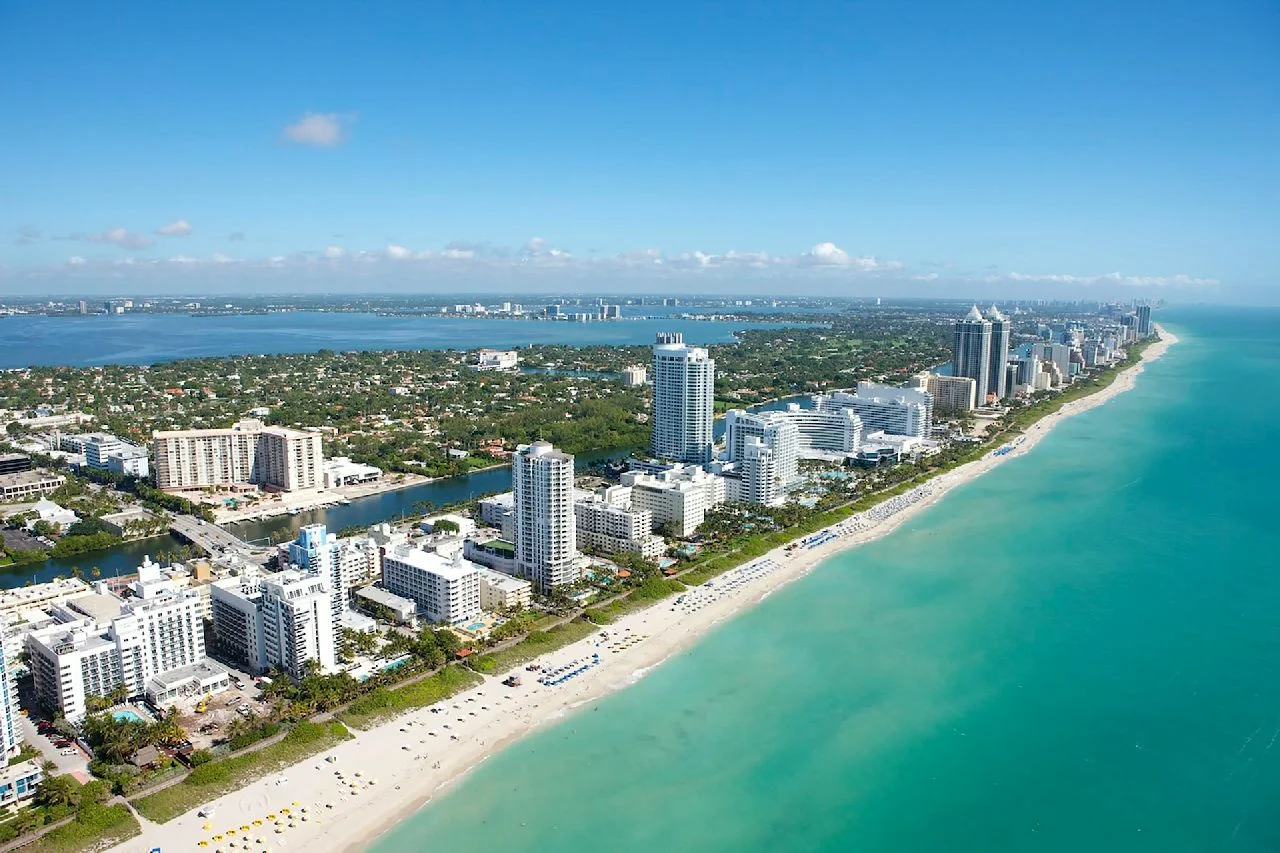
When you’re heading to Miami, it can help to strike a balance between the hotter summer months and the cooler ones. Going sometime in the middle works well, and March is a great example. Before you go, it’s worth knowing the average weather in March.
Things To Know About Miami

Miami is a sprawling city made up of several very distinct areas. Miami itself, officially the City of Miami, sits mostly on the Florida mainland, taking in Wynwood and Little Haiti to the north and Coconut Grove to the south, with the striking Downtown Miami skyline at its heart.
Miami is often thought to include the world-famous South Beach, though South Beach is technically a neighborhood within the separate city of Miami Beach. Miami Beach sits on a barrier island about one mile wide and nine miles long, roughly three miles offshore from the city of Miami.
The wider Miami metropolitan area has a population of about 6.1 million and stretches north to include West Palm Beach and Fort Lauderdale.
What Is The Average Temperature In March
The average temperature in Miami in March for a typical day ranges from a high of 77°F (25°C) to a low of 70°F (21°C). Most people would call it pleasantly warm, with a gentle breeze.
For comparison, the hottest month in Miami, August, sees highs around 87°F (30°C) and lows around 83°F (28°C). The coldest month, January, sees highs around 74°F (23°C) and lows around 67°F (19°C).
How Much Does It Rain In March
In Miami, March falls within the city’s dry season, so rainfall is relatively light compared to summer.
On average:
- Monthly Rainfall: About 2-3 inches (50-75 mm) total
- Rainy Days: Around 5-7 days see measurable rain
- Rain Pattern: Showers are usually brief, often in the afternoon, and quickly give way to sunshine
Overall, it’s a warm, sunny month, which makes it a popular time for beach trips and outdoor events.
How Cloudy Is Miami In March
Miami sees clear or mostly sunny skies (partly cloudy or better) for about 16.3 hours a day in March on average, roughly 68% of daylight hours. March is typically one of the sunniest months of the year in Miami, while June tends to have the least sun, with clear skies for only about 7.6 hours a day on average.
When Is The Sunrise And Sunset In March
A typical day in Miami during March has about 12.0 hours of daylight, with sunrise around 7:04 AM and sunset around 7:03 PM.
The day with the most daylight in Miami is typically around June 22, with about 13.8 hours, while around December 15 has the least, with only about 10.5 hours.
How Humid Is It In March
March in Miami runs moderately humid, with average relative humidity around 68%, which feels somewhat sticky but not oppressive. September tends to be the most humid month, with relative humidity closer to 74%, while the drier months of the dry season, including March, sit lower, around that 68% mark.
How Windy Is It In March In Miami
Historically, wind in Miami during March averages around 14.4 mph (23.1 km/h). November tends to be the windiest month, averaging around 14.8 mph (23.8 km/h), while July tends to be the calmest, averaging around 9.3 mph (15.0 km/h).
What Is The Sea Temperature
If you do decide to go for a swim, the water is pleasant. Average sea temperature this month is around 24°C (75°F), not the warmest you’ll find in Miami, but comfortable enough that heading to the beach is common even among locals.
What To Wear In March
With an average high of 77°F (25°C) and a low of 70°F (21°C), March generally feels pleasantly warm with a gentle breeze. Most people do fine in something light, like a favorite t-shirt.
Best Time To Visit Miami

Weather-wise, the best window for a Miami trip is from November through April. Those months bring mild temperatures along with relatively little rain and humidity. Peak heat runs from around March through August, reaching up to around 90°F. Even summer can work well if humidity and the occasional rain shower don’t bother you. Between late February and mid-April, expect plenty of spring breakers in Miami; if that scene appeals to you, it’s a great window to visit, and if you’d rather have more peace and quiet, it’s worth picking another time to go.
Planning Around March Weather in Miami
March is a popular month in South Florida because it usually sits between the cooler winter and the hot, humid summer. Days are often warm and sunny, evenings can feel pleasant, and rain is generally less frequent than later in the year. It is also spring break season, so beaches, hotels and restaurants can be busy. Weather varies from year to year, so check a forecast close to your travel dates rather than relying on averages alone.
Beach and Pool Tips
- Use sunscreen even on cloudy days, because UV levels can be high in spring.
- Check for beach flags or lifeguard notices before swimming, since rip currents can occur at any time of year.
- Expect the ocean to feel cooler than in summer, and bring a light cover-up for breezy evenings.
- Arrive early at popular beaches if you want parking and a good spot.
Things to Do in Any Weather
If a shower rolls in, Miami has plenty of indoor options such as museums, markets, food halls and shopping areas. Many outdoor activities, including walking tours, boat trips and parks, are best in the morning or late afternoon. For ideas, read how to spend a day in Miami and the weather in Miami in November. For a packing plan, see how to pack a carry-on.
Booking and Timing Advice
Because March is busy, book flights and hotels early, compare cancellation policies and keep some flexibility in your schedule. Traffic can be heavy, especially on weekends and around major events, so build in extra time to reach the airport. Prices and availability change often, so confirm details with providers before you commit.

Hey everyone! I’m Luciana, a travel writer from Colombia. I focus on places I know and love — mostly Colombia, Central America, and North America.
I’m all about discovering those hidden gems that don’t always make it into the guidebooks — think street food stalls, quiet little towns, underrated hiking trails, and the kind of real-life moments that truly capture what a place is all about.
Whether I’m wandering through vibrant markets in Guatemala, cruising across the deserts of the U.S., or hiking the Andes, I try to keep it real and useful — no fluff, just the good stuff.
When I’m not off exploring or writing about it, you’ll probably find me sipping too much coffee, editing photos, or dreaming up my next trip.
Let’s keep discovering and traveling smarter — one trip at a time.